
Chess Study Plan for Beginners (7-Day Step-by-Step Guide)
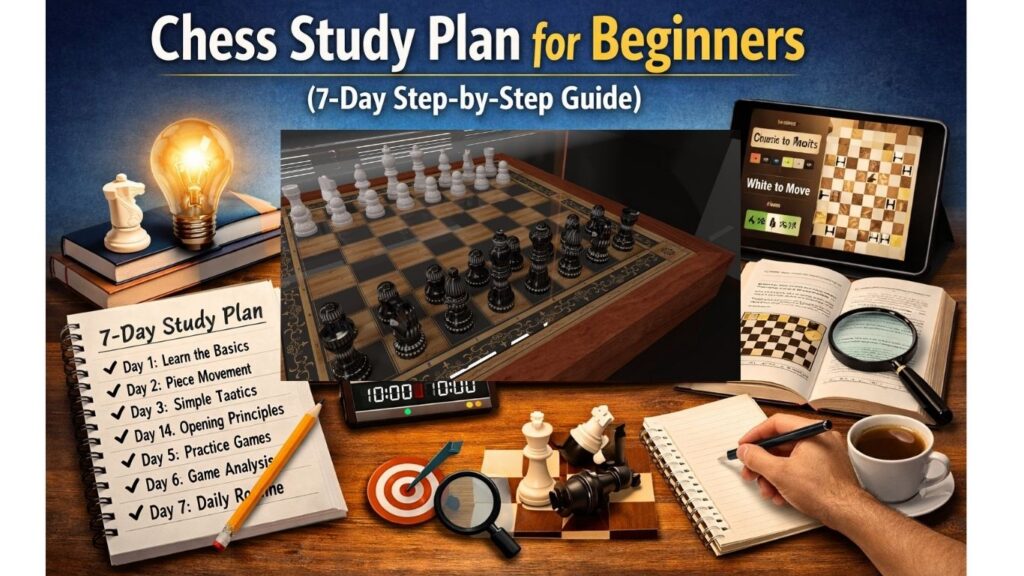
This chess study plan for beginners gives you a clear daily structure to improve step by step.
Learning chess can feel overwhelming at first, especially if you don’t have a clear plan.
This chess study plan for beginners gives you a simple 7-day structure to understand the basics, practice effectively, and start improving step by step.
By following this plan, you’ll avoid confusion and focus on the right skills each day.
Why Beginners Need a Chess Study Plan
Many beginners try to learn chess without a clear direction. They play random games, watch videos, and practice inconsistently, which slows down improvement.
By following a structured approach like this chess study plan for beginners, you can improve faster and avoid common mistakes.
A clear plan helps you:
- Stay consistent
- Focus on important skills
- Build confidence step by step
Day 1: Learn the Basics of Chess
Start by understanding:
- The chessboard setup
- Names of pieces
- Objective of the game
Focus on:
- What is a check?
- What is checkmate?
If you’re completely new, start here:
How to Play Chess for Beginners
Day 2: Understand How Pieces Move
Learn how each piece moves:
- Pawn
- Knight
- Bishop
- Rook
- Queen
- King
Don’t rush this step.
Take time to:
- Practice movements
- Visualize positions
Day 3: Practice Simple Chess Tactics
Now start learning basic tactics:
- Fork
- Pin
- Skewer
- Discovered attack
Solve 10–15 easy puzzles
This improves:
- Pattern recognition
- Decision making
Day 4: Learn Basic Opening Principles
Instead of memorizing openings, focus on:
- Control the center
- Develop pieces quickly
- Castle early
- Avoid moving the same piece repeatedly
This builds strong foundations and helps beginners understand how to play chess with better structure and confidence.
Day 5: Play Practice Games
Start playing games (online or offline).
Focus on:
- Applying what you learned
- Not winning
After each game:
Think:
- What went wrong?
- What could be better?
Day 6: Analyze Your Games
This is where real improvement happens.
Review your games:
- Where did you make mistakes?
- Did you miss tactics?
Use tools or review manually
This step is often ignored — but it’s very powerful.
Day 7: Build a Simple Daily Routine
Now combine everything into a routine:
- Solve puzzles (10–15 minutes)
- Play 1–2 games
- Review your games
- Learn one concept
By following this chess study plan for beginners, you create a strong habit for long-term improvement.
Practical Tips for Faster Improvement
- Don’t try to learn everything at once
- Focus on understanding, not memorizing
- Practice consistently
- Learn from your mistakes
Common Mistakes Beginners Make in a Chess Study Plan
Many beginners follow a plan but still struggle due to common mistakes:
- Playing too many games without learning
- Ignoring tactics practice
- Not reviewing games
- Trying to learn too many concepts at once
Avoiding these mistakes makes your chess study plan for beginners much more effective.
Frequently Asked Questions
How long does it take to learn chess?
Focus on:
- Tactics
- Playing games
- Reviewing mistakes
How long does it take to learn chess?
You can learn the basics in a few days, but improvement takes consistent practice over weeks and months.
What should beginners practice daily?
Focus on:
- Tactics
- Playing games
- Reviewing mistakes
Is a study plan necessary for beginners?
Yes. A structured chess study plan for beginners helps avoid confusion and speeds up learning.
What to Do After This 7-Day Chess Study Plan
After completing this chess study plan for beginners, continue with a simple routine:
- Practice tactics daily
- Play 1–2 games regularly
- Analyze your games
- Learn basic strategy concepts
Consistency is more important than intensity.
Conclusion
Learning chess becomes much easier when you follow a clear and structured approach.
This chess study plan for beginners gives you a simple roadmap to start your journey and improve step by step.
Consistency is the key — even small daily practice leads to big improvement over time.
Start Structured Learning
If you want structured chess training rather than learning at random, you can start with an assessment class here.
Book Assessment Class