
Benefits of Chess for Children: 9 Powerful Skills Kids Develop
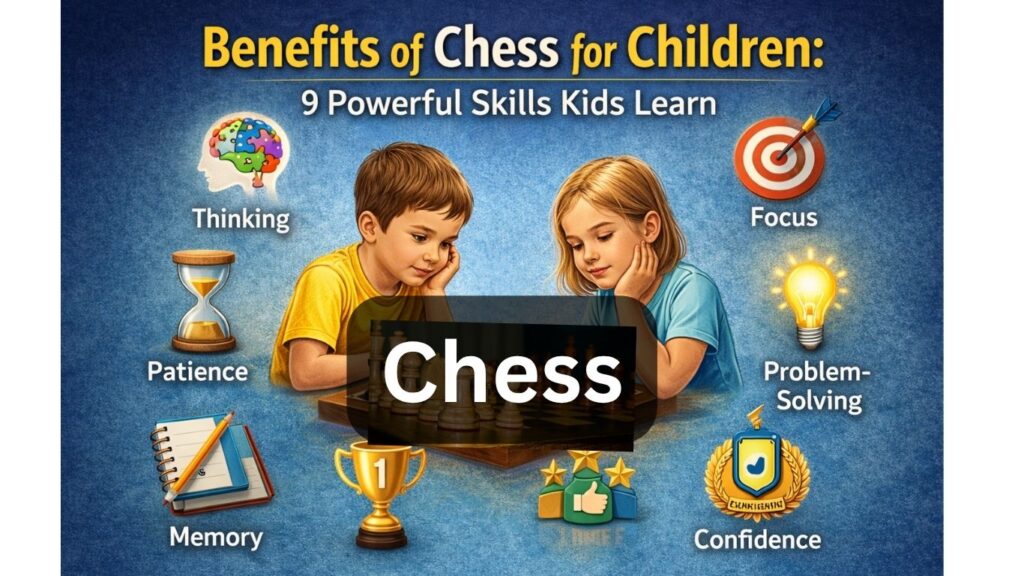
The benefits of chess for children include improved focus, better decision-making, and stronger thinking skills.
The benefits of chess for children go far beyond simply learning a game. Chess helps children improve concentration, strengthen problem-solving ability, and develop patience and logical thinking skills.
Because of these advantages, many parents and schools encourage children to start learning chess at an early age.
To support consistent learning, many parents now choose structured online chess coaching, where children can learn the game step by step, engagingly and systematically.
Why Chess is Good for Children's Thinking Skills
Understanding the benefits of chess for children helps parents see why this game is widely recommended for developing strong thinking skills.
Chess is often described as a “gymnasium for the brain” because it trains children to observe carefully, think logically, and make thoughtful decisions.
1. Chess Improves Concentration
One of the biggest challenges children face today is maintaining focus. With mobile games, social media, and constant digital distractions, concentration levels often drop quickly.
Chess helps children train their focus naturally.
When playing chess, a child must carefully observe the board and think about questions like:
- What is my opponent threatening?
- Which piece is under attack?
- What move should I play next?
If a child plays a move without paying attention, they might lose an important piece. Over time, children learn that careful thinking leads to better results.
This habit gradually improves their ability to concentrate not only during chess but also while doing homework, reading, and studying.
2. Chess Develops Problem-Solving Skills
Every chess position presents a new challenge. Children constantly need to find solutions to problems on the board.
For example, a child might ask:
- How do I defend my king?
- How can I capture my opponent’s piece?
- How do I checkmate the opponent?
To answer these questions, they must analyze different options and predict possible outcomes.
This process teaches children logical thinking and structured problem-solving. Instead of guessing randomly, they begin to think step by step before making decisions.
These skills are extremely valuable in school subjects like maths, science, and reasoning-based learning.
3. Chess Improves Memory
Chess requires players to remember patterns, ideas, and positions.
As children play more games, they start recognizing common situations such as:
- Checkmate patterns
- Opening ideas
- Tactical combinations
- Common mistakes to avoid
For example, once a child learns a back-rank checkmate, they can recognize similar opportunities in future games.
Over time, the brain builds a mental library of chess patterns. This constant mental exercise strengthens memory and pattern recognition, which can also help children in academic learning.
4. Chess Teaches Patience
In many modern games, everything happens quickly and rewards instant reactions. Chess is different.
Chess rewards players who slow down, observe carefully, and think before acting.
Children quickly realize that rushing moves often lead to mistakes. Losing a queen or getting checkmated after a careless move teaches them an important lesson:
Good decisions require patience.
This skill is extremely valuable in real life. Children who practice patience through chess often become better at handling challenging tasks, exams, and complex problems.
5. Chess Builds Responsibility
In team sports, mistakes can sometimes be blamed on teammates. In chess, every move is the player’s own decision.
If a child loses a piece or misses a good move, they know the responsibility belongs to them.
This teaches an important life lesson: decisions have consequences.
Over time, children learn to think carefully before acting and accept responsibility for their choices. This helps build confidence, independence, and accountability.
6. Chess Improves Emotional Control
Every chess player experiences losses. Even the strongest players make mistakes and lose games.
For children, this can initially feel frustrating. However, chess gradually teaches them how to handle these emotions in a healthy way.
Instead of reacting with anger or disappointment, children learn to ask questions like the following:
- What mistake did I make?
- How can I improve next time?
- What should I do differently?
This mindset builds emotional resilience and helps children develop a healthy attitude toward challenges and setbacks.
7. Chess Strengthens Academic Skills
Many studies suggest that chess can support improvement in several academic areas.
Because chess involves logic, calculation, and pattern recognition, it naturally supports learning in subjects such as:
- Mathematics
- Reading comprehension
- Logical reasoning
Children who receive structured chess classes develop strong thinking skills and often improve faster through guided practice. They also build problem-solving abilities that support learning in school and help them understand complex concepts more easily.
8. Chess Encourages Strategic Thinking
At the beginner level, children focus mainly on single moves. As they improve, they begin to think about longer plans and strategies.
They start asking questions like:
- Which pieces should I develop first?
- Where should my king be safest?
- What is my plan for the middle of the game?
This type of thinking teaches children to look beyond immediate actions and consider long-term consequences.
Strategic thinking is a valuable skill not only in chess but also in education, career planning, and decision-making later in life.
9. Chess Builds Confidence
One of the most rewarding aspects of chess is the feeling of improvement.
When children solve puzzles, learn new tactics, or win games after careful thinking, they experience a sense of achievement.
They begin to understand that practice leads to progress.
This type of confidence is very healthy because it comes from effort and learning, not luck.
As children improve in chess, they often become more confident in other areas of life as well.
These chess benefits for kids go far beyond the game itself and often support academic growth.
At What Age Should Children Start Learning Chess?
Many children can begin learning chess between 5 and 7 years old. At this age, they are usually able to understand the rules and follow the basic structure of the game.
However, the most important factor is that learning should be fun and engaging.
Instead of focusing on competition too early, children should first enjoy:
- solving simple puzzles
- playing friendly games
- discovering checkmate patterns
A playful learning approach helps build long-term interest in the game.
To help children improve faster, you can also follow a structured chess study plan for beginners.
How Often Should Kids Practice Chess?
Children do not need to study chess for long hours to improve.
A healthy learning routine could be:
- 2 to 3 chess sessions per week
- 15 to 30 minutes per session
- a mix of puzzles and games
Short and consistent practice sessions are usually more effective than long and tiring study periods.
Frequently Asked Questions About Chess for Kids
Is chess good for children's brain development?
Yes. Chess improves concentration, memory, and logical thinking. Because the game requires planning and analysis, it helps children develop strong cognitive skills.
At what age should a child start learning chess?
Most children can start learning chess between the ages of 5 and 7. At this age, they can understand the rules and begin solving simple chess puzzles.
How often should kids practice chess?
Children usually improve with 2–3 practice sessions per week. Short sessions with puzzles and games are often more effective than long study periods.
Final Thoughts
Chess is much more than just a board game. It is a powerful learning tool that helps children develop concentration, patience, problem-solving skills, and strategic thinking.
If your child would like to learn chess in a structured and engaging way, professional guidance can make a big difference.
Our online chess coaching program is designed to help children build strong thinking skills through carefully structured lessons and guided practice.
Start your child’s chess journey today with structured guidance and expert coaching.