
Chess Openings

Every chess game begins with an opening. Those first few moves shape the position, influence your plans, and often determine how comfortably you enter the middlegame.
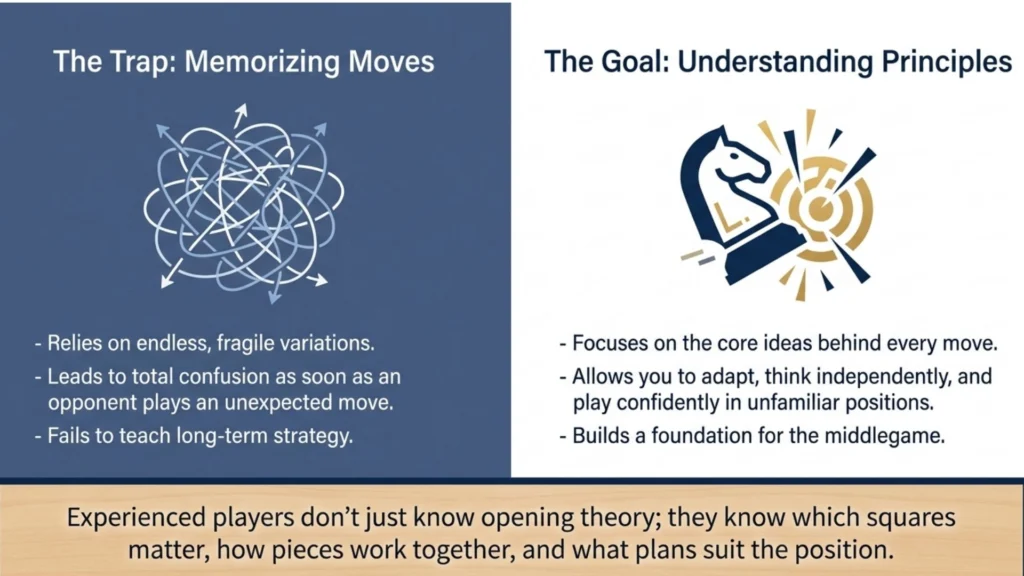
Many beginners believe that becoming good at chess openings means memorising dozens of move sequences. While experienced players certainly know opening theory, their real strength comes from understanding the ideas behind the moves. They know which squares matter, how their pieces should work together, and what plans suit the position.
For new players, this is an important distinction. Memorising moves without understanding often leads to confusion as soon as an opponent chooses an unexpected variation. Understanding the principles behind an opening allows you to adapt, think independently, and play confidently even in unfamiliar positions.
In this guide, you’ll learn what chess openings are, why they matter, the essential opening principles every player should know, and how to study openings effectively without relying solely on memorisation. Whether you’re learning your first opening or looking to strengthen your foundation, this page will help you develop a clearer understanding of the opening phase.
Quick Summary
Chess openings are the first stage of every chess game.
A good opening helps you:
- Develop your pieces efficiently.
- Control the centre of the board.
- Keep your king safe.
- Connect your pieces.
- Prepare for a successful middlegame.
The most important goal for beginners is not memorising long variations. Instead, focus on understanding the principles that guide strong opening play. Once you understand these ideas, learning individual openings becomes much easier.
What Are Chess Openings?
A chess opening is the first phase of a chess game, usually covering the first several moves played by both players.
During this stage, neither player is trying to launch an immediate attack. Instead, both players are working to develop their pieces, establish control over important squares, and create a position that supports their long-term plans.
Every opening follows the same overall objective: to build a healthy position from which your pieces can work together effectively.
Although there are hundreds of named openings and thousands of variations, they all attempt to solve the same fundamental problems:
- How can I develop my pieces quickly?
- How can I control the centre?
- How can I protect my king?
- How can I prepare for the middlegame?
Once you understand these questions, chess openings become far less intimidating.
Why Do Chess Openings Matter?
The opening sets the direction for the rest of the game.
A strong opening doesn’t guarantee victory, but it gives you a solid position from which you can make good decisions. A poor opening, on the other hand, often creates problems that become increasingly difficult to solve later.
A good opening helps you:
- Develop your pieces naturally.
- Control key central squares.
- Improve king safety through castling.
- Coordinate your pieces.
- Enter the middlegame with confidence.
A poor opening can lead to:
- Delayed development.
- Weak pawn structures.
- An exposed king.
- Passive pieces.
- Early tactical mistakes.
One pattern I’ve repeatedly noticed while coaching beginners is that many losses begin long before the first tactical mistake. They often start with an uncomfortable opening position where pieces are undeveloped, the king remains in the centre, and simple opening principles have been ignored.
Learning good opening habits makes every later phase of the game easier to play.
The Five Fundamental Opening Principles
Regardless of which opening you choose, strong opening play is built on a handful of universal principles. These ideas appear repeatedly in almost every successful opening.
If you remember only one thing from this guide, remember these principles.
1. Control the Centre
The centre of the chessboard consists primarily of the squares:
- e4
- d4
- e5
- d5
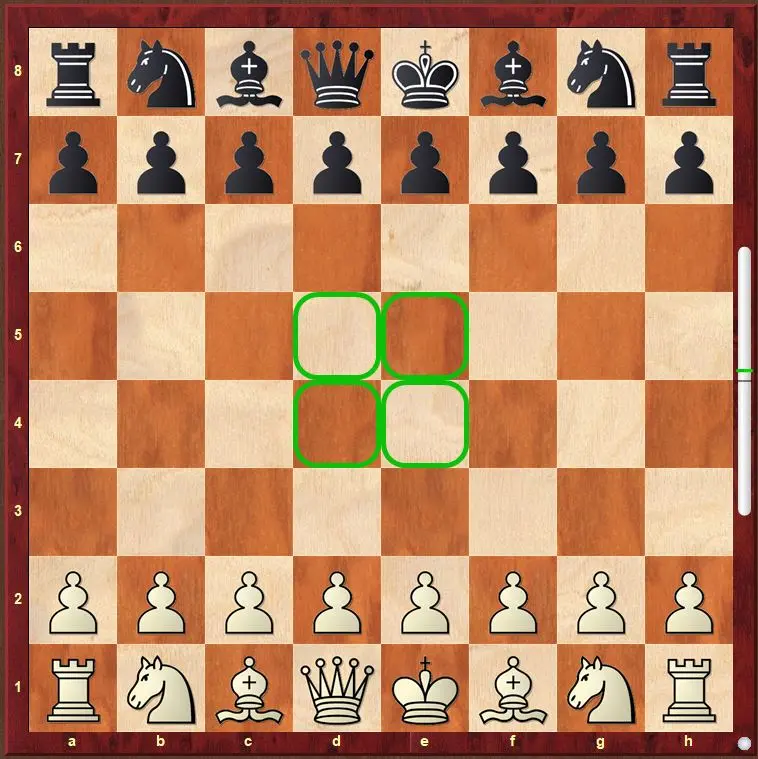
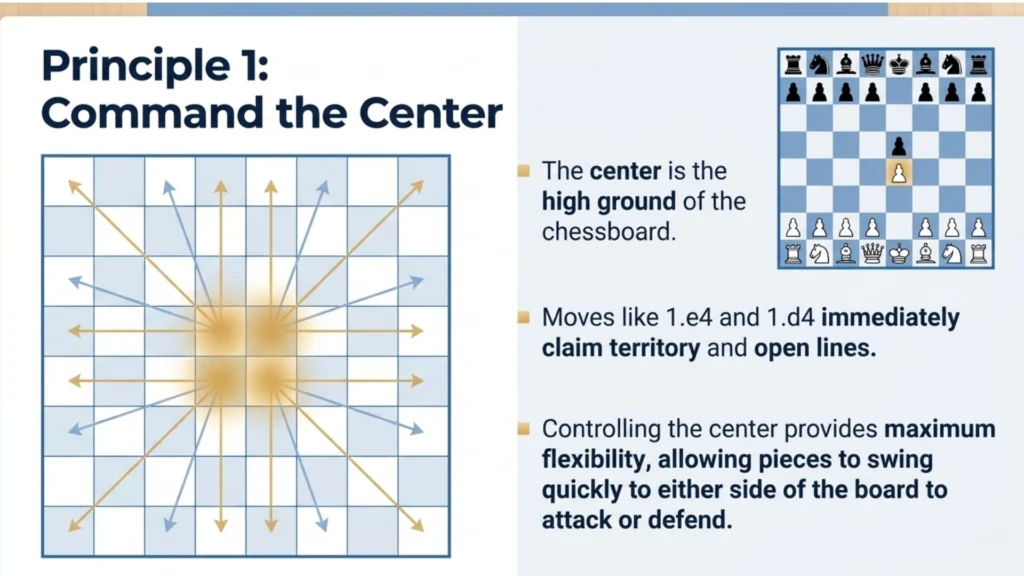
Pieces placed near the centre influence more squares and usually become more active.
Moves such as 1.e4 and 1.d4 immediately compete for central control, allowing your pieces to develop more effectively.
Controlling the centre also gives you greater flexibility. Your pieces can move to either side of the board more easily, making it simpler to respond to your opponent’s plans.
2. Develop Your Pieces
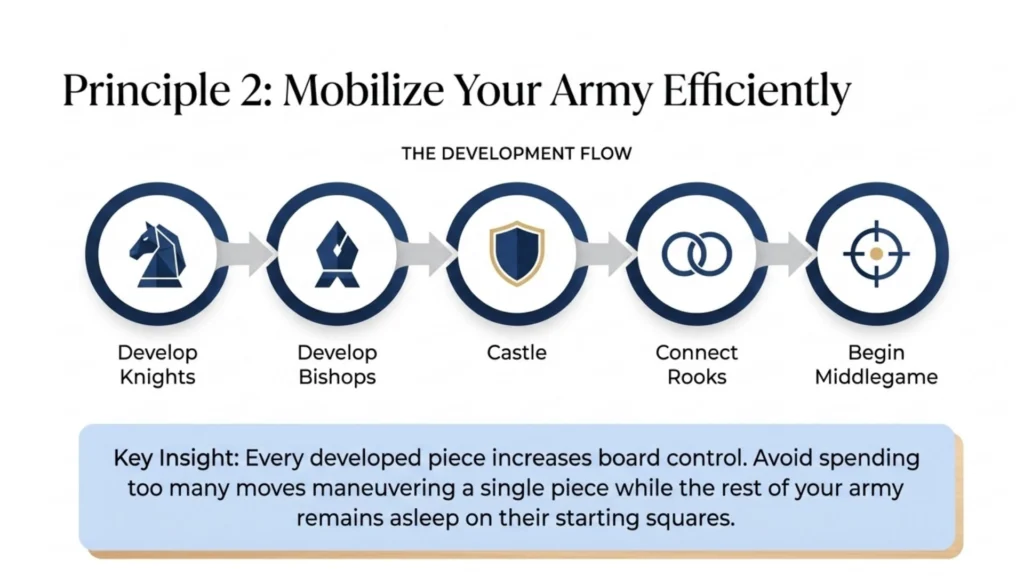
Development means bringing your pieces from their starting squares to active positions where they contribute to the game.
A typical development order is:
- Develop your knights.
- Develop your bishops.
- Castle your king.
- Connect your rooks.
Every developed piece increases your control of the board and improves coordination between your forces.
Avoid spending too many moves with a single piece while the rest of your army remains undeveloped.
3. Castle Early
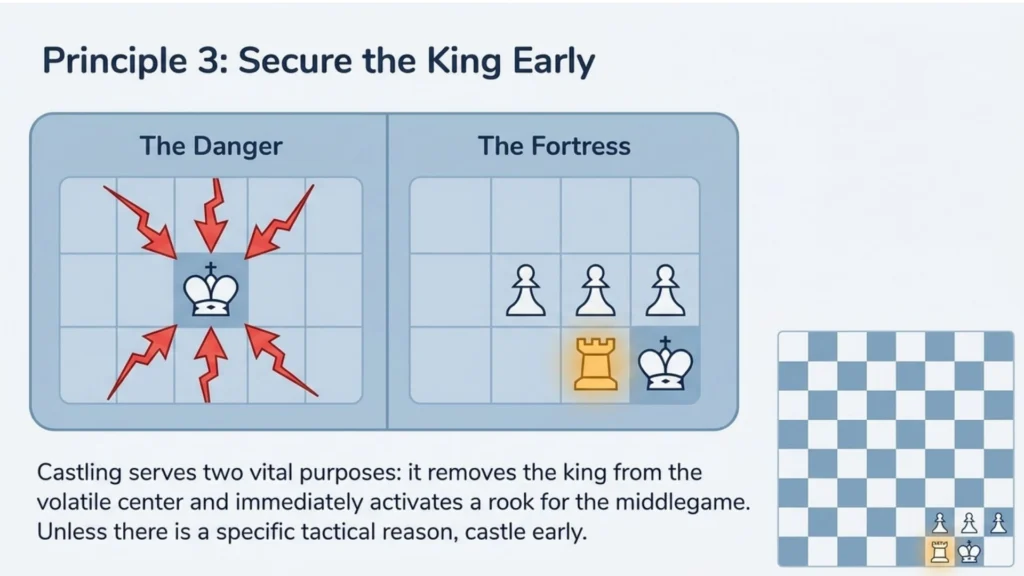
Your king is safest when castled.
Castling serves two important purposes:
- It moves your king away from the centre, where attacks often occur.
- It activates one of your rooks, allowing it to participate in the game much sooner.
Many beginners delay castling because they don’t see an immediate danger. However, strong players usually castle early unless there is a specific reason not to.
Good king safety allows you to focus your attention on active play rather than constant defence.
4. Avoid Moving the Same Piece Repeatedly
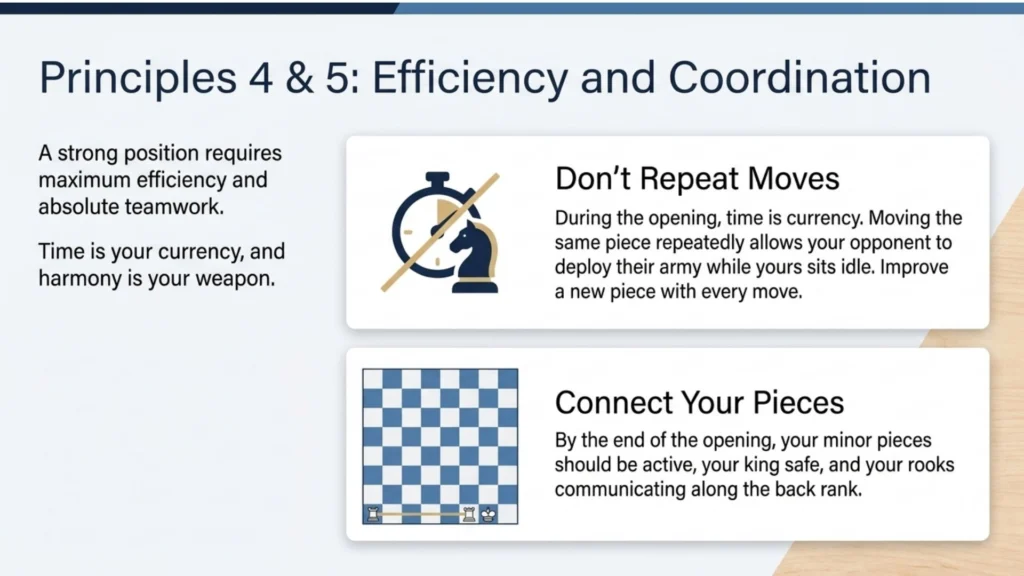
During the opening, every move is valuable.
If you move one piece several times without a good reason, your opponent may use those extra moves to develop additional pieces and build a stronger position.
Instead, try to improve a different piece with each move until your development is complete.
There are exceptions, especially when tactics demand immediate action, but as a general rule, efficient development is more valuable than unnecessary manoeuvring.
5. Connect Your Pieces
A strong chess position is one where your pieces work together.
By the end of the opening, your goal is to have:
- Active minor pieces.
- A safely castled king.
- Connected rooks.
- Pieces supporting one another.
When your pieces are coordinated, attacks become stronger, defensive tasks become easier, and planning becomes much more straightforward.
Rather than thinking about individual pieces, begin thinking about your entire army working together toward the same objective.
Popular Chess Openings
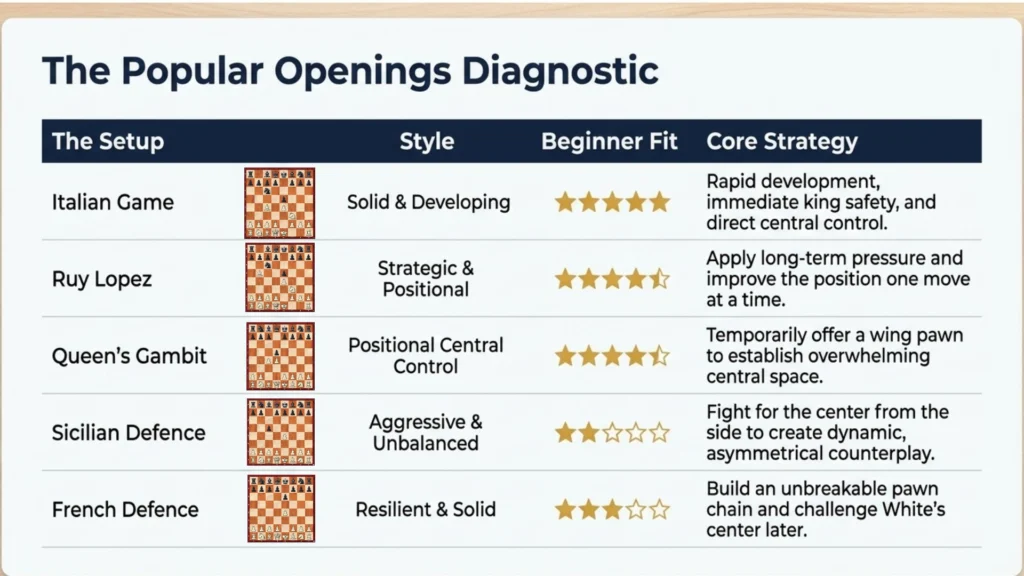
Once you understand the basic opening principles, you’ll begin to notice that many openings share similar ideas. Rather than viewing every opening as completely different, it helps to think of them as families of positions with their own plans and strategic themes.
For beginners, learning a few reliable openings thoroughly is far more effective than trying to memorise dozens of variations.
Italian Game
Moves:
- e4 e5
- Nf3 Nc6
- Bc4
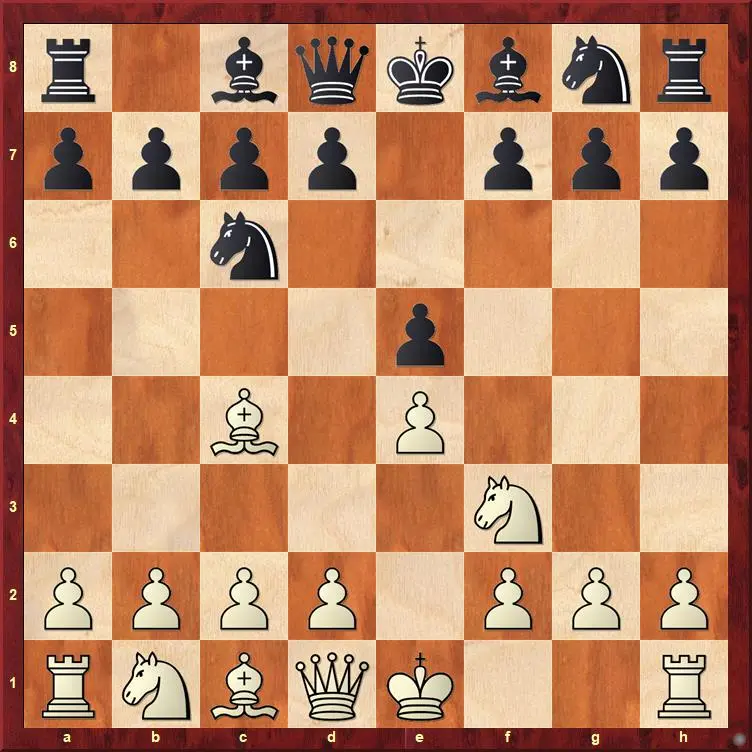
The Italian Game is one of the oldest and most recommended openings for beginners. It encourages natural development, rapid castling, and control of the centre while introducing simple attacking ideas.
You’ll often learn:
- Piece development
- King safety
- Basic tactical patterns
- Coordination between pieces
If you’re learning your first opening as White, the Italian Game is an excellent choice.
Ruy Lopez
Moves:
- e4 e5
- Nf3 Nc6
- Bb5
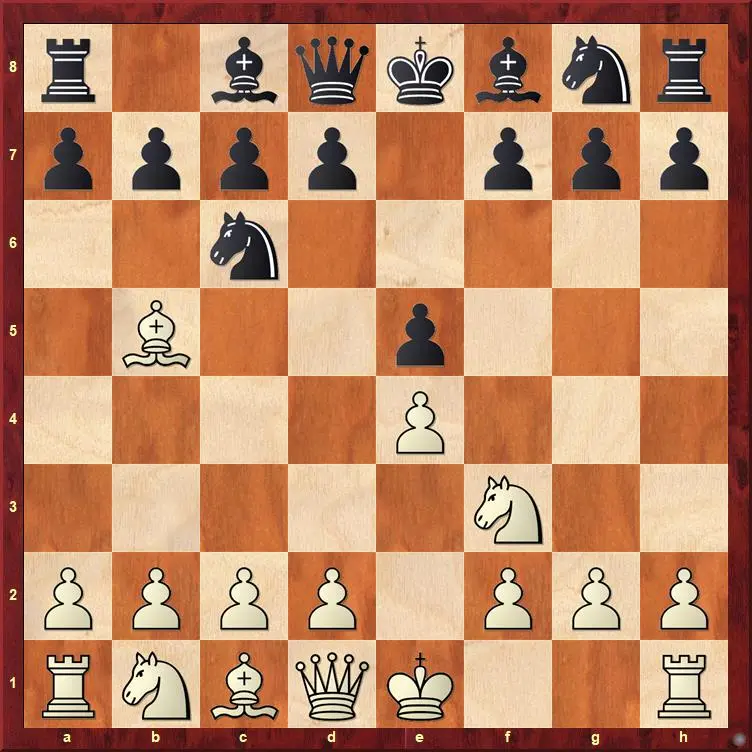
The Ruy Lopez is one of the most respected openings in chess history.
Instead of launching an immediate attack, White applies long-term pressure on Black’s position. The opening teaches patience, strategic planning, and the value of small positional advantages.
Students often discover that strong chess isn’t always about immediate tactics. Sometimes it’s about improving your position one move at a time.
Queen’s Gambit
Moves:
- d4 d5
- c4
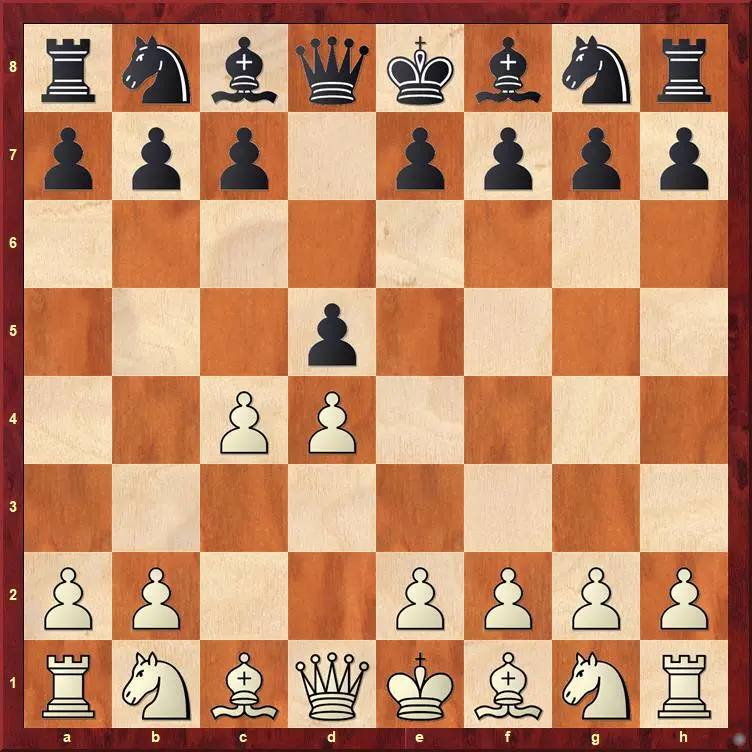
Despite its name, the Queen’s Gambit is not a true sacrifice. White offers a pawn temporarily to gain stronger central control.
This opening introduces important positional ideas such as:
- Pawn structure
- Space advantage
- Long-term planning
- Piece coordination
It remains one of the most popular openings at every level of chess.
Sicilian Defence
Moves:
- e4 c5
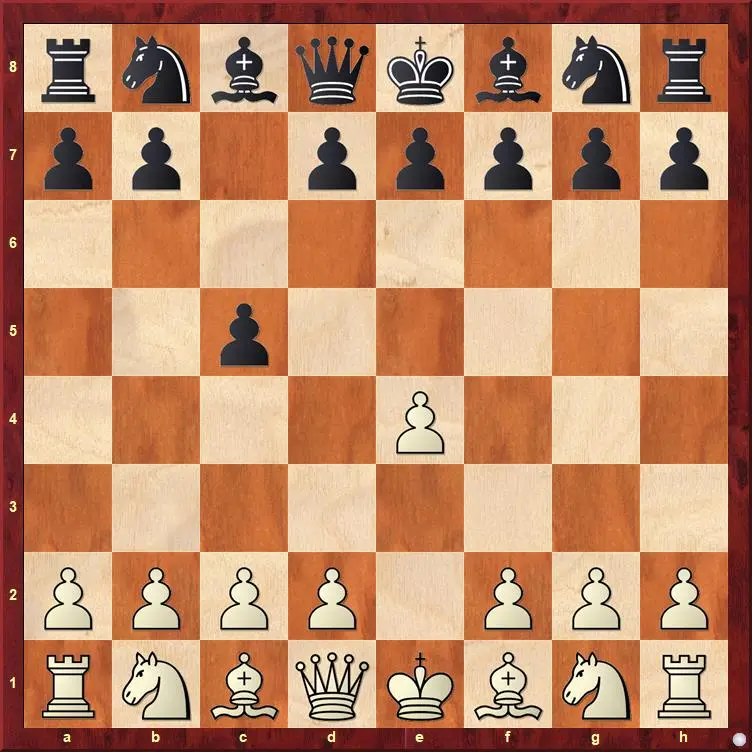
The Sicilian Defence is Black’s most popular response to 1.e4.
Rather than mirroring White’s central pawn, Black immediately fights for the centre from the side. This often leads to dynamic, unbalanced positions with chances for both players.
Although many Sicilian variations are highly theoretical, beginners can still benefit from understanding its strategic ideas without memorising long move sequences.
French Defence
Moves:
- e4 e6
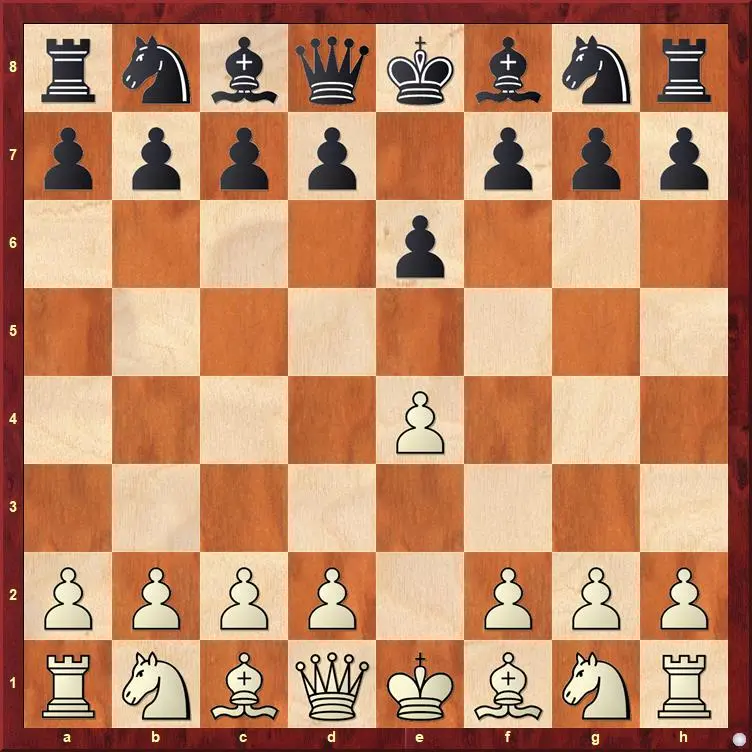
The French Defence creates a solid and resilient pawn structure.
Black prepares to challenge White’s centre on the following moves instead of contesting it immediately.
Players who enjoy careful planning and solid positions often appreciate the French Defence.
Opening Families
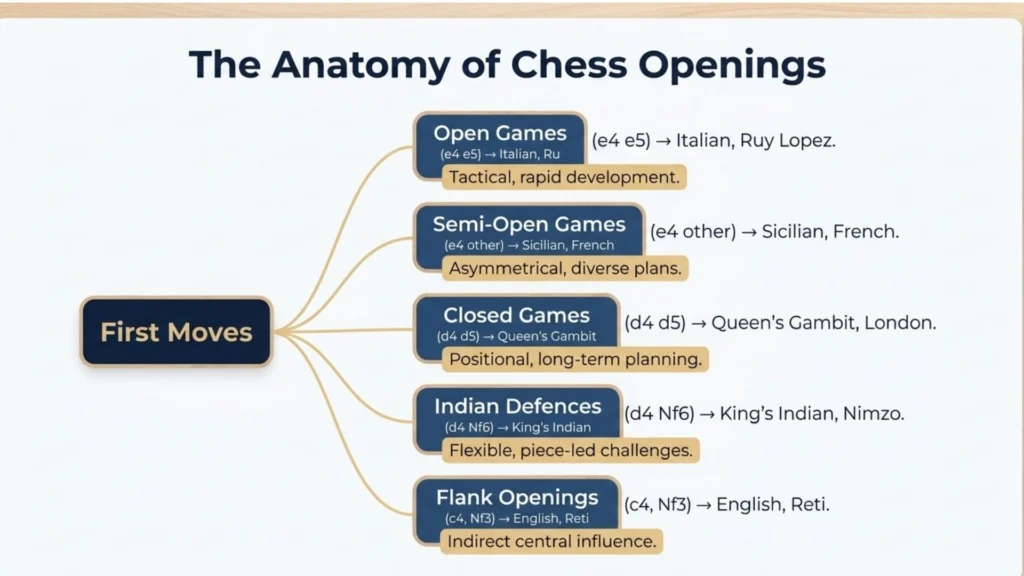
Thousands of named openings exist, but most belong to a handful of major opening families. Recognising these families makes chess far less overwhelming because similar positions often share similar strategic ideas.
Open Games
Open Games begin with:
- e4 e5
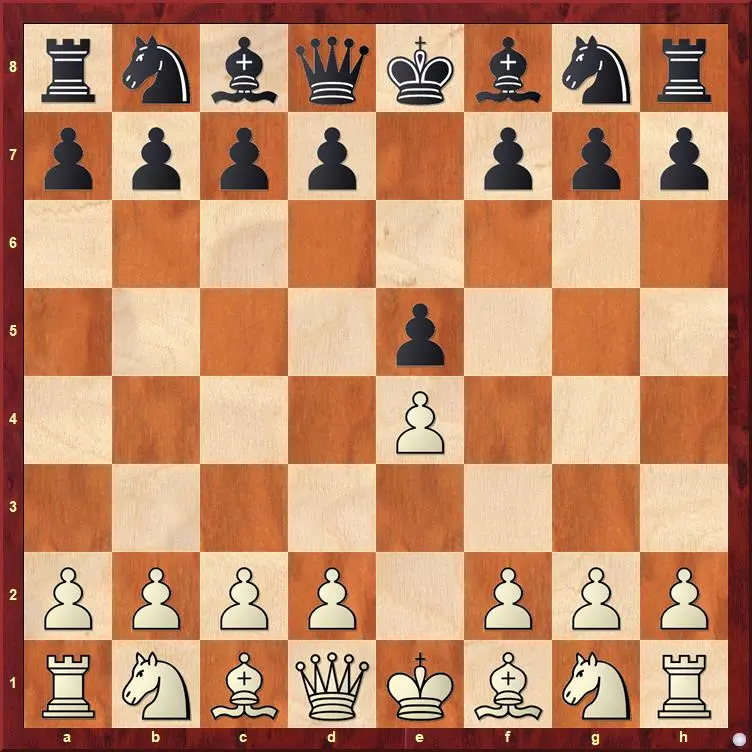
Both players immediately contest the centre.
Typical characteristics include:
- Rapid development
- Open lines
- Tactical opportunities
- Active piece play
Examples include:
- Italian Game
- Ruy Lopez
- Scotch Game
- Four Knights Game
Semi-Open Games
Semi-Open Games begin with 1.e4 followed by a reply other than 1…e5.
Examples include:
- Sicilian Defence
- French Defence
- Caro-Kann Defence
- Scandinavian Defence
- Alekhine Defence
These openings often create asymmetrical positions where each player pursues different strategic plans.
Closed Games
Closed Games usually begin with:
- d4 d5
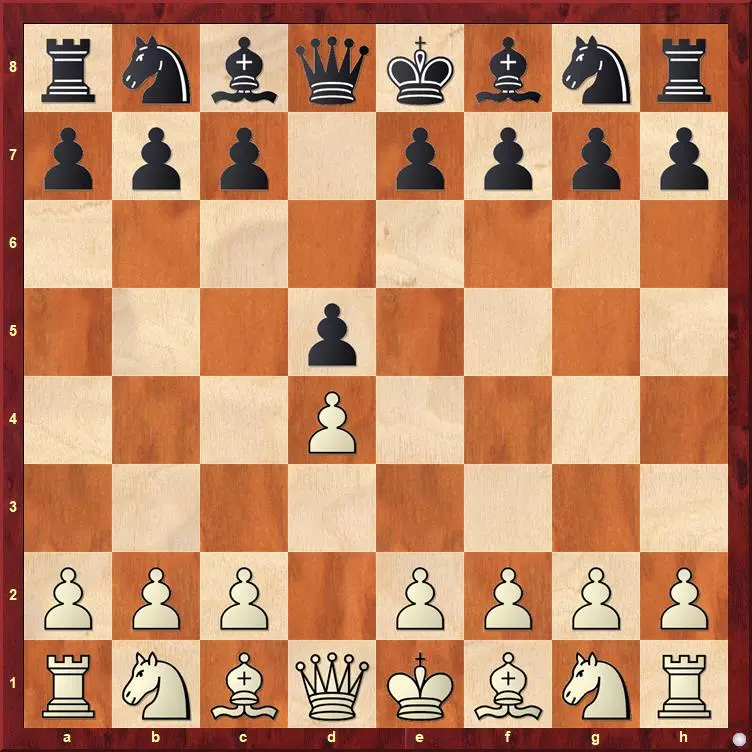
Pawn structures tend to remain stable for longer, making long-term planning especially important.
Examples include:
- Queen’s Gambit
- London System
- Colle System
These openings often reward patience and positional understanding.
Indian Defences
Indian Defences generally arise after:
- d4 Nf6
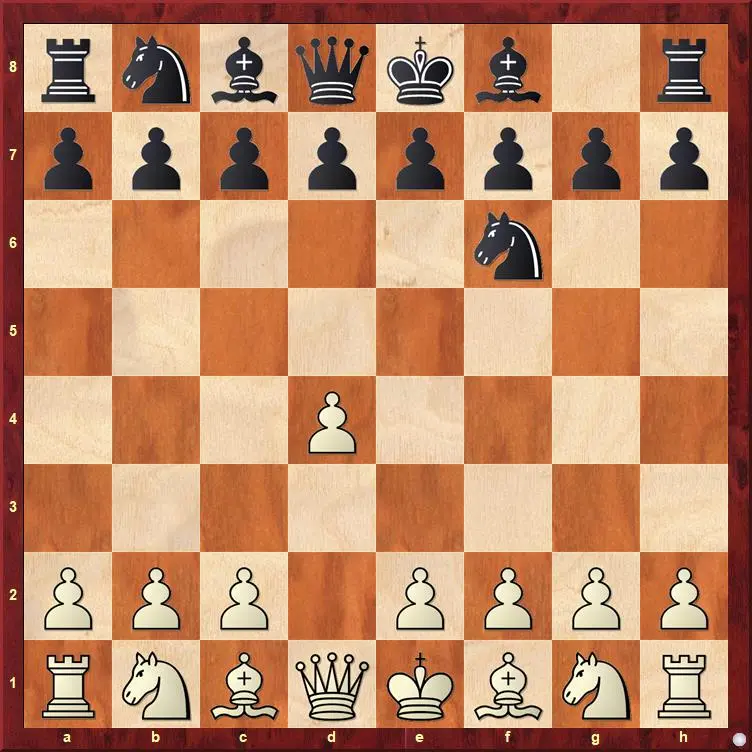
Instead of occupying the centre immediately with pawns, Black develops pieces first and challenges the centre later.
Popular examples include:
- King’s Indian Defence
- Nimzo-Indian Defence
- Queen’s Indian Defence
- Grünfeld Defence
These openings introduce flexible and dynamic strategic ideas.
Flank Openings
Flank Openings begin with moves such as:
- c4
- Nf3
- b3
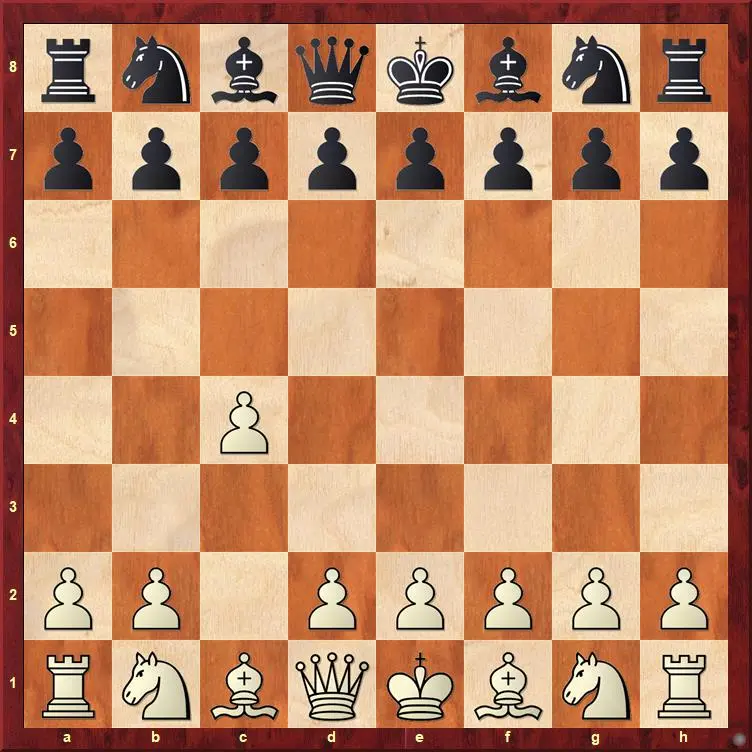
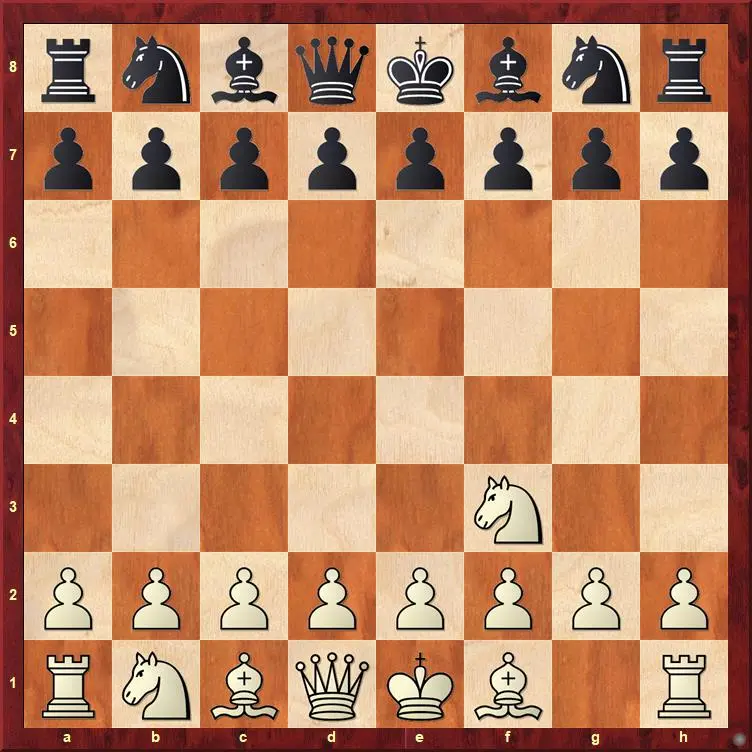
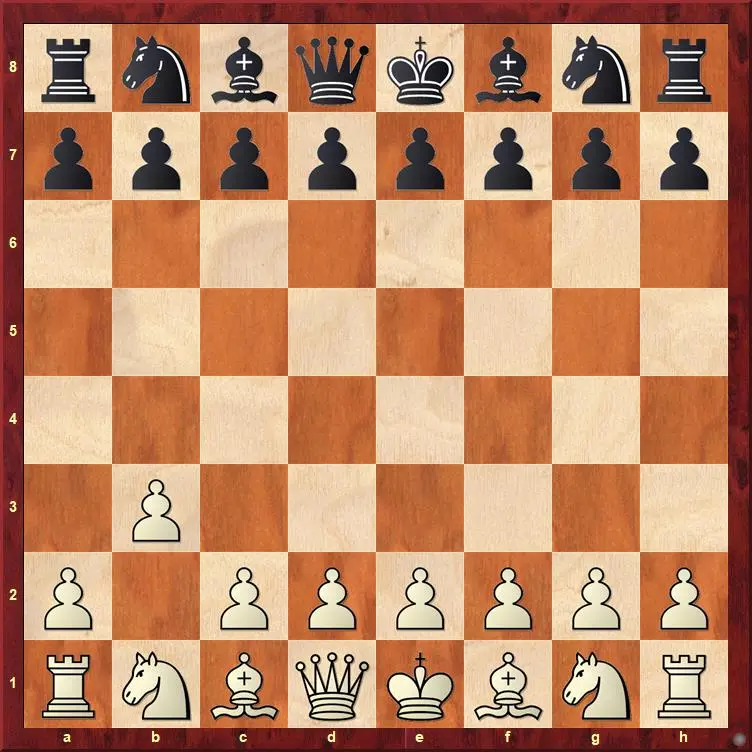
Instead of occupying the centre immediately with a pawn, White influences it indirectly.
These openings often lead to flexible positions and can transpose into many other opening systems.
Common Opening Mistakes
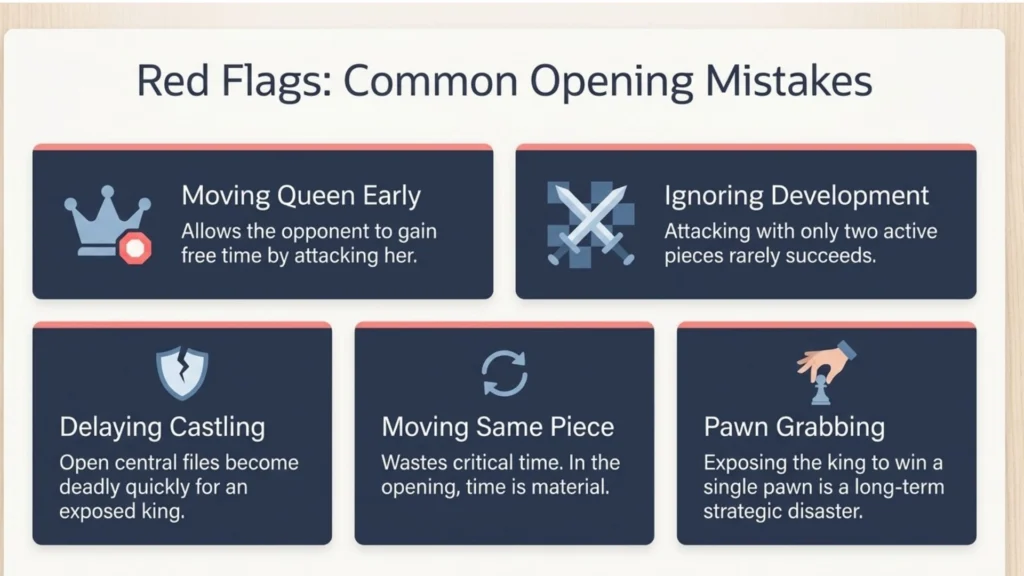
Most opening mistakes aren’t caused by choosing the wrong opening. They’re caused by ignoring basic principles.
Recognising these mistakes early can save countless games.
Moving the Queen Too Early
The queen is your most valuable attacking piece, but bringing it out too soon often allows your opponent to gain time by attacking it with developing moves.
A useful guideline is to develop your minor pieces before activating the queen unless there is a clear tactical reason.
Ignoring Piece Development
Some beginners become focused on attacking immediately while leaving several pieces on their starting squares.
An attack with only two active pieces rarely succeeds against a well-developed opponent.
Before looking for combinations, ask yourself:
“Have I developed my army?”
Delaying Castling
Keeping your king in the centre may seem harmless for several moves, but open files and diagonals can quickly become dangerous.
Castling early usually improves both king safety and rook activity.
Moving the Same Piece Repeatedly
Each extra move spent on one piece allows your opponent to improve another.
Unless you’re responding to a tactical threat, continue bringing new pieces into the game.
Grabbing Pawns Too Early
An extra pawn can be tempting.
However, if winning that pawn means delaying development or exposing your king, the long-term cost is often greater than the short-term gain.
One pattern I’ve repeatedly noticed while coaching beginners is that they often value material more than activity. As players improve, they begin to appreciate that active pieces frequently matter more than a single pawn.
Memorising Without Understanding
Many new players spend hours memorising opening variations but become lost as soon as their opponent chooses an unexpected move.
Understanding plans, piece placement, and pawn structures allows you to adapt naturally when the game leaves familiar territory.
A player who understands ideas will usually outperform a player who only remembers moves.
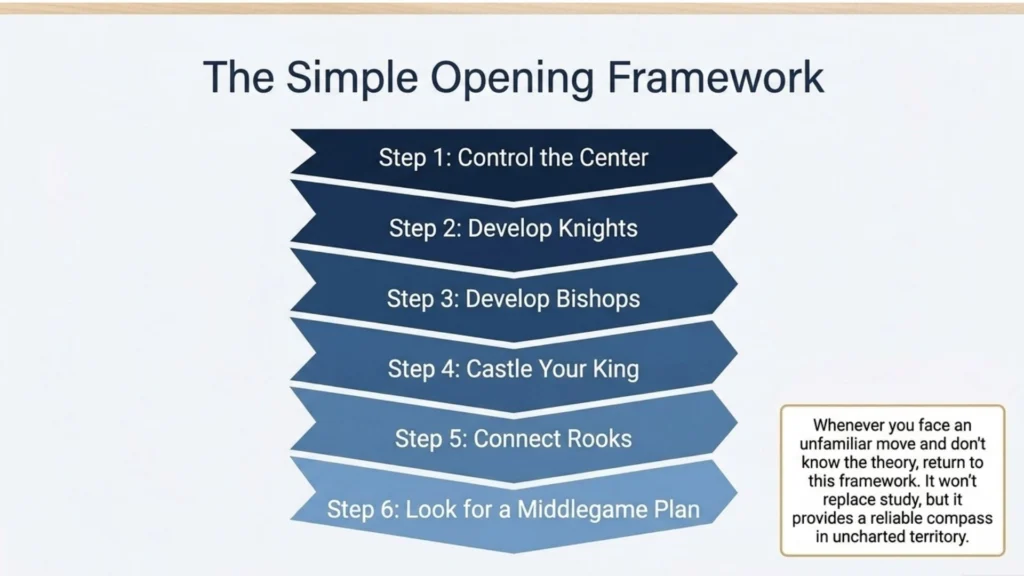
A Simple Opening Framework
Whenever you’re unsure what to do in the opening, return to this simple framework.
Control the Centre
↓
Develop Your Knights
↓
Develop Your Bishops
↓
Castle Your King
↓
Connect Your Rooks
↓
Look for a Middlegame Plan
This framework won’t replace opening study, but it provides a reliable guide in unfamiliar positions.
Practical Example
Imagine you’re playing White.
After:
- e4 e5
- Nf3 Nc6
- Bc4
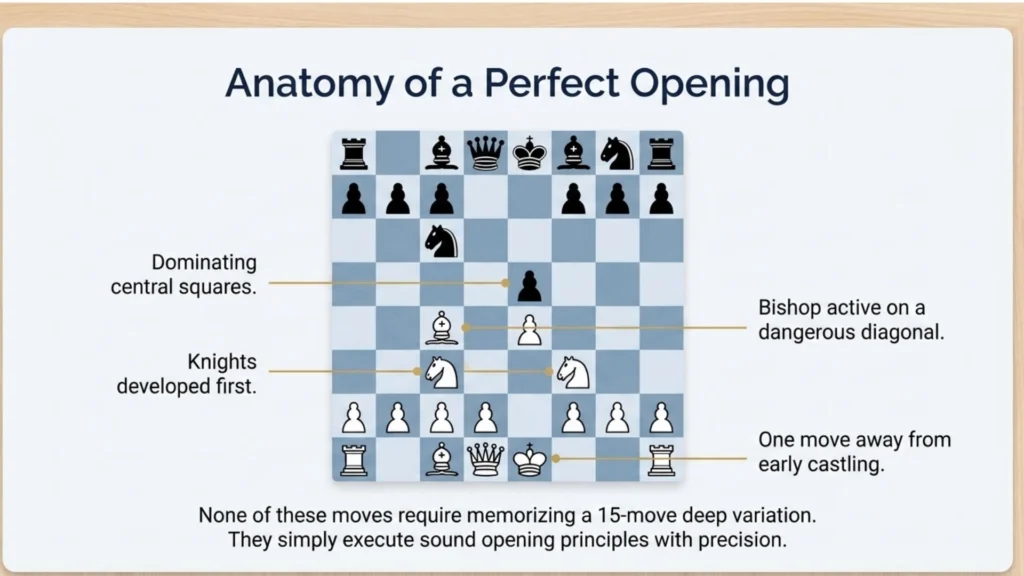
you’ve already achieved several important objectives:
- You control central squares.
- One knight is developed.
- One bishop is active.
- You’re ready to castle.
- Your pieces are working together.
Notice that none of these moves required memorising a long variation. They simply followed sound opening principles.
This is why experienced coaches encourage beginners to learn ideas before theory.
How to Study Chess Openings Effectively
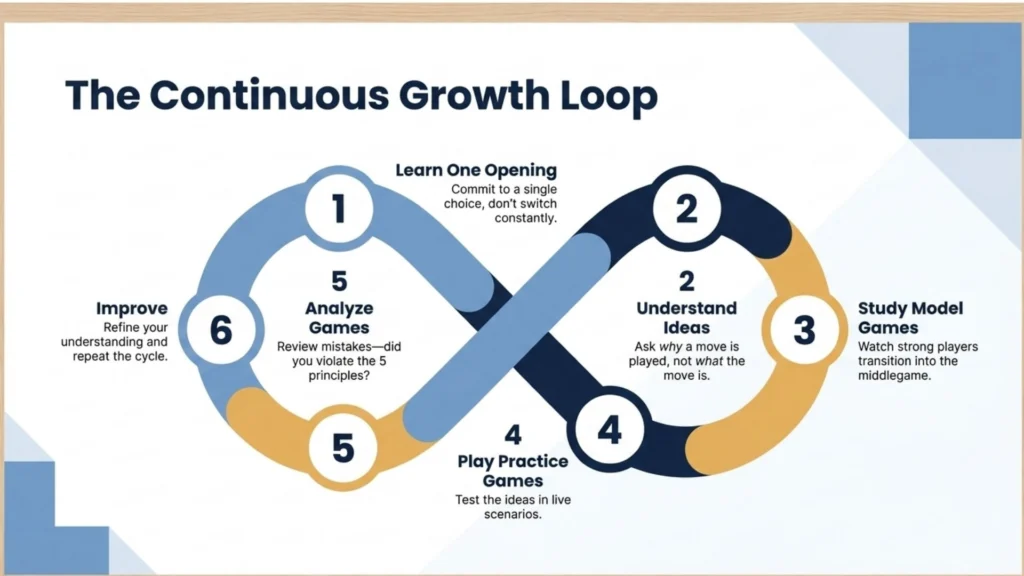
Opening study should build understanding, not just memory.
A practical study routine looks like this.
Step 1: Learn One Opening
Choose one opening as White and one response as Black against both 1.e4 and 1.d4.
Avoid constantly switching between openings. Playing the same opening repeatedly allows you to become familiar with the resulting positions and recognise common plans.
Step 2: Understand the Ideas
Instead of asking:
“What is move seven?”
Ask yourself:
- Why is this move played?
- Which squares are important?
- Which pieces belong on which squares?
- What is each side trying to achieve?
Understanding these ideas will help you make good decisions even when the game leaves familiar territory.
Step 3: Study Model Games
Watching complete games played by strong players helps you understand how the opening connects naturally to the middlegame.
Rather than memorising every move, observe:
- How pieces are developed.
- When players castle.
- Which pawn breaks they choose.
- How they convert their opening advantage into a long-term plan.
Step 4: Analyse Your Own Games
Your own games are often your best teacher.
After each game, review questions such as:
- Did I follow the opening principles?
- Did I develop all my pieces?
- Did I castle at the right time?
- Did I waste time moving the same piece repeatedly?
- Which decision caused my position to become difficult?
Reviewing your games helps identify recurring mistakes and leads to much faster improvement than simply playing more games.
Choosing an Opening Repertoire
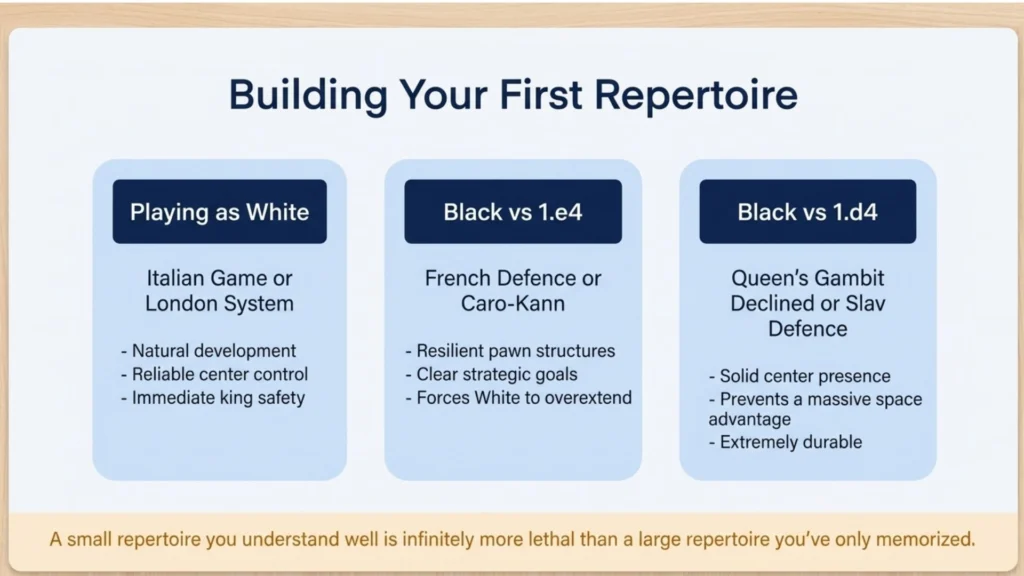
One of the most common questions beginners ask is:
“Which openings should I learn first?”
The answer is surprisingly simple: start small.
Many players believe they need to know dozens of openings to improve, but this often leads to confusion rather than progress. A small repertoire that you understand well is far more valuable than a large repertoire you’ve only memorised.
Think of your opening repertoire as a collection of familiar positions. The more often you play them, the more comfortable you’ll become with the resulting plans, pawn structures, and strategic ideas.
A Simple Repertoire for Beginners
As White, consider learning one of these openings:
- Italian Game
- Queen’s Gambit
- London System
As Black against 1.e4, you might choose:
- French Defence
- Caro-Kann Defence
- Scandinavian Defence
As Black against 1.d4, good options include:
- Queen’s Gambit Declined
- Slav Defence
There is no single “best” repertoire. The goal is to choose openings that match your style and play them consistently until you understand the positions they create.
Understanding Plans Is More Important Than Memorising Moves
Strong players do not succeed simply because they know more opening theory.
They succeed because they understand the ideas behind the moves.
When studying an opening, ask questions like:
- Which squares are most important?
- Where do my pieces belong?
- What pawn breaks should I prepare?
- Which side of the board should I play on?
- Which pieces should I exchange?
- What are my long-term plans?
These questions help you understand the position instead of memorising individual moves.
For beginners, understanding these strategic ideas provides far greater long-term value than learning twenty moves of opening theory.
How Chess Openings Lead to the Middlegame
The opening is only the beginning of the game.
Every decision you make during the opening influences the type of middlegame that follows.
For example:
- Open positions often reward active pieces, tactical awareness, and rapid attacks.
- Closed positions usually require careful planning, manoeuvring, and patience.
- Asymmetrical pawn structures can create attacking chances for one player while giving the other side long-term strategic targets.
When studying an opening, don’t stop after the first ten moves. Observe how experienced players continue the game, what plans they choose, and how they improve their pieces.
Understanding this transition from opening to middlegame helps you appreciate why certain opening moves are played.
Learning Roadmap
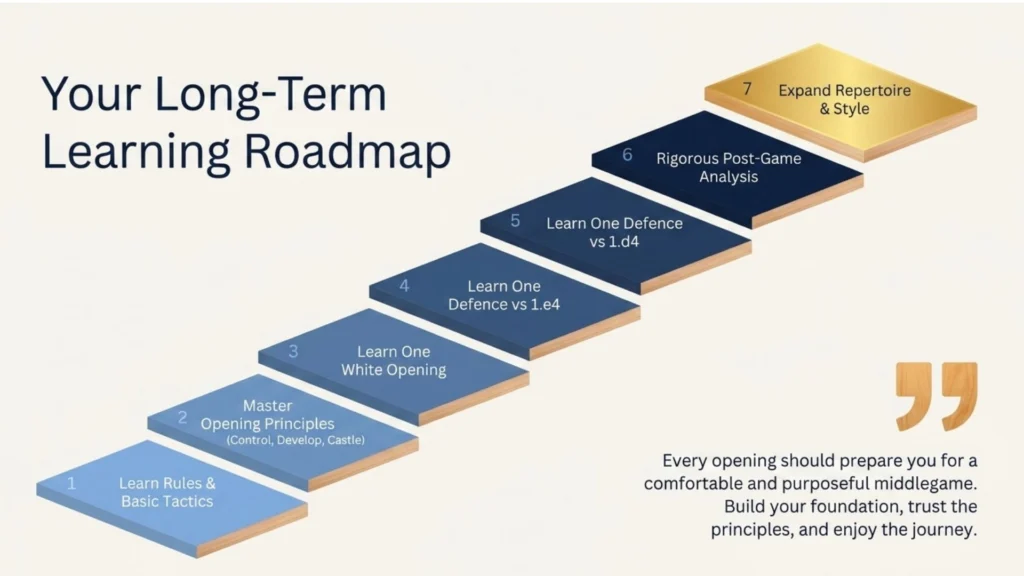
Opening study becomes much easier when you progress one step at a time.
Stage 1: Learn the Rules
Become comfortable with:
- Piece movement
- Check and checkmate
- Basic tactical ideas
Stage 2: Master Opening Principles
Before studying named openings, understand:
- Centre control
- Development
- King safety
- Piece coordination
These principles appear in almost every opening.
Stage 3: Learn One Opening as White
Choose a reliable opening and play it regularly.
Focus on understanding the ideas rather than memorising every variation.
Stage 4: Learn One Defence Against 1.e4
Develop confidence with Black by learning one solid response to White’s most common first move.
Stage 5: Learn One Defence Against 1.d4
Once you’re comfortable against 1.e4, add a dependable response to 1.d4.
Build your repertoire gradually rather than trying to learn several openings at once.
Stage 6: Analyse Your Games
After each game, ask yourself:
- Did I control the centre?
- Did I develop all my pieces?
- Did I castle early?
- Did I lose time moving the same piece repeatedly?
- Which opening decision caused problems later in the game?
These questions will help you identify recurring mistakes and improve steadily.
Stage 7: Expand Your Repertoire
As your understanding grows, you can begin adding new openings and exploring different styles of play.
The objective isn’t to know every opening. It’s to become confident in the positions you choose to play.
Frequently Asked Questions
What is the best chess opening for beginners?
The Italian Game is widely recommended because it teaches natural development, centre control, king safety, and basic attacking ideas without requiring extensive memorisation.
Should I memorise opening theory?
Not initially.
Focus on understanding opening principles and typical plans. Once those ideas become familiar, learning specific variations becomes much easier.
How many openings should a beginner know?
A beginner only needs:
- One opening as White.
- One defence against 1.e4.
- One defence against 1.d4.
A small, well-understood repertoire is more effective than a large collection of partially learned openings.
How long does the opening phase last?
The opening usually lasts between 8 and 15 moves, although the exact number varies depending on the position.
The transition to the middlegame begins once both players have largely completed their development and start pursuing longer-term plans.
Is it okay if my opponent plays an unfamiliar move?
Yes.
Most games leave established opening theory quite early. If you understand the principles of development, centre control, king safety, and piece coordination, you’ll usually be able to find sensible moves even when your opponent chooses an unexpected line.
Key Takeaways
- Chess openings lay the foundation for the rest of the game.
- Good openings prioritise development, centre control, king safety, and coordination.
- Understanding ideas is more valuable than memorising long variations.
- A small, consistent opening repertoire helps you improve faster.
- Analysing your own games is one of the best ways to strengthen your opening play.
- Every opening should prepare you for a comfortable and purposeful middlegame.
Continue Your Chess Journey
Learning chess openings is an important step towards becoming a stronger player, but it’s only one part of the game. To continue improving, combine sound opening knowledge with tactical training, strategic understanding, endgame technique, and regular analysis of your own games.
As your confidence grows, explore related topics to build a complete understanding of chess and develop the skills needed for consistent long-term improvement.
Related Pages
- Learn Chess
- Chess Strategy
- Chess Tactics
- Chess Endgames
- Chess Improvement
- Best Chess Openings for Beginners
- Italian Game
- Ruy Lopez
- Queen’s Gambit
- Sicilian Defence
- French Defence
- Caro-Kann Defence
- Online Chess Coaching