
Learn Chess: A Complete Guide to Structured Improvement

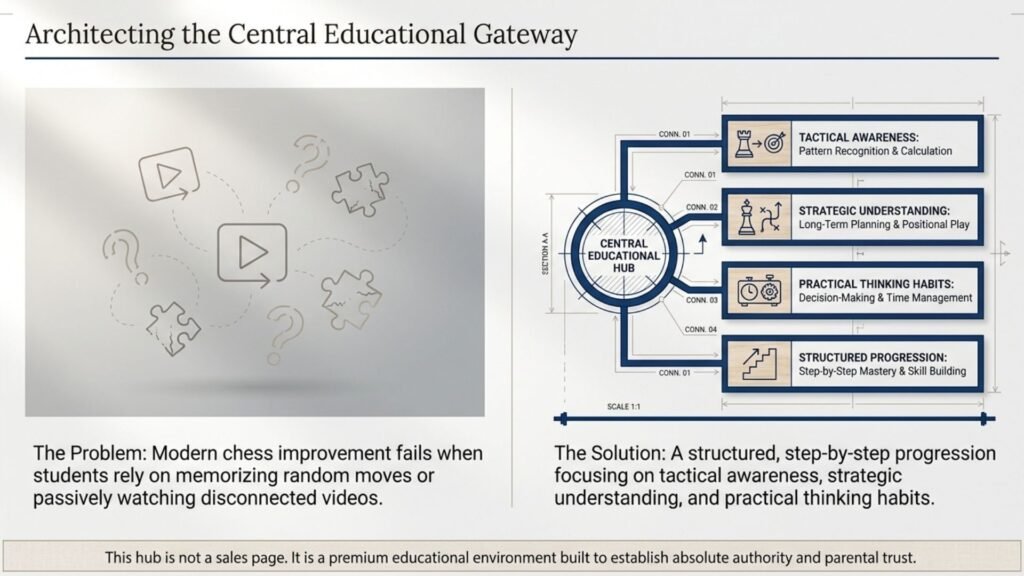
Learning chess is most effective when you follow a clear and structured path instead of trying to learn everything at once. Many beginners spend hours watching random videos, memorizing opening moves, or solving puzzles without understanding how each area of chess contributes to long-term improvement. While all of these activities have value, real progress comes from studying the right concepts in the right order.
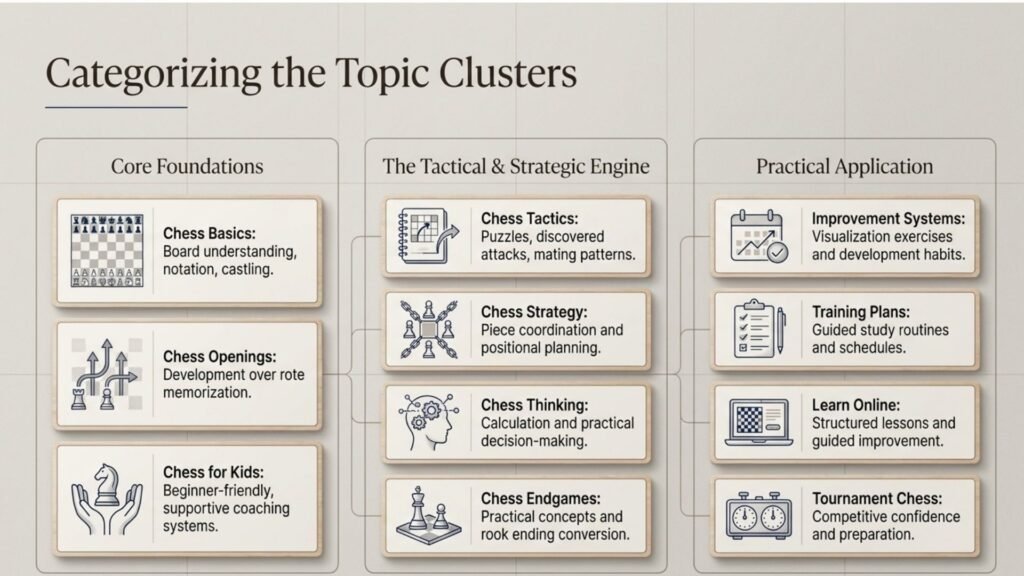
This learning hub brings together every major area of chess into one organized educational resource. Whether you’re learning the game for the first time, helping your child begin their chess journey, preparing for tournaments, or looking for a structured way to improve, you’ll find step-by-step learning pathways designed to help you build confidence and practical playing strength.
Rather than treating chess as a collection of disconnected topics, this guide shows how chess basics, openings, tactics, strategy, thinking, endgames, structured training, and tournament experience work together to create steady, long-term improvement.
Quick Summary
This learning hub will help you:
- Learn chess from the very beginning.
- Understand how chess improvement really works.
- Explore every major area of chess learning.
- Follow a structured learning pathway instead of random study.
- Build stronger thinking and decision-making habits.
- Prepare confidently for tournament chess.
- Develop long-term improvement through consistent practice.
Your Chess Learning Roadmap
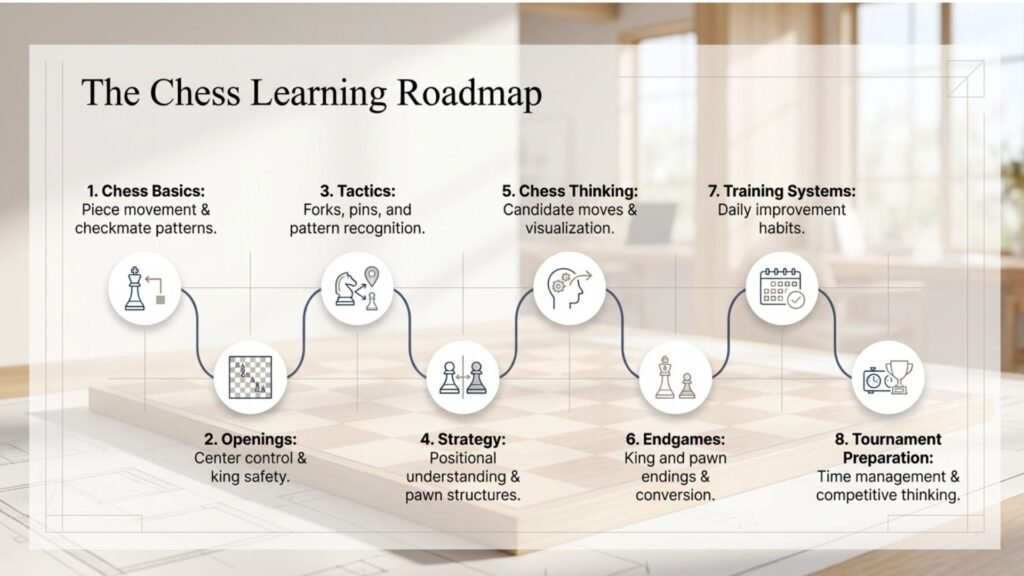
Strong chess players develop their skills gradually. Every stage builds upon the previous one, creating a complete learning system that supports long-term improvement.
- Chess Basics
- Chess Rules
- Opening Principles
- Chess Openings
- Chess Tactics
- Chess Strategy
- Chess Endgames
- Chess Thinking
- Structured Training
- Chess Tournaments
- Long-Term Improvement
Skipping important foundations often creates weaknesses that become harder to correct later. Learning step by step allows every new concept to reinforce what you have already learned.
Explore Chess Learning Topics
Chess Basics
Every chess player begins with the fundamentals. Before learning advanced openings or strategic ideas, it’s important to understand how the board works, how the pieces move, and the basic principles that guide every game.
In this section, you’ll learn:
- Piece movement
- Board coordinates
- Check and checkmate
- Castling
- Piece values
- Chess notation
- Basic checkmate patterns
- Essential beginner concepts
Chess Openings
Strong openings are built on understanding rather than memorization. Learning opening principles helps you develop your pieces efficiently, control the center, keep your king safe, and reach comfortable middlegame positions regardless of what your opponent plays.
Topics include:
- Center control
- Development
- King safety
- Opening principles
- Common opening mistakes
- Beginner-friendly opening systems
- Transitioning into the middlegame
Understanding why opening moves are played is far more valuable than memorizing long variations.
Chess Tactics
Tactical awareness is one of the fastest ways to improve at chess. Many games are decided by simple tactical opportunities that players either recognize or overlook.
This section covers:
- Forks
- Pins
- Skewers
- Discovered attacks
- Double attacks
- Mating patterns
- Tactical combinations
- Puzzle solving
- Pattern recognition
Regular tactical practice improves calculation, board awareness, and confidence during practical games.
Chess Strategy
Once tactical awareness improves, players begin to understand the positional side of chess. Strategy teaches you how to create plans, improve your pieces, and gradually build long-term advantages.
You’ll explore:
- Pawn structures
- Weak squares
- Open files
- Piece activity
- Space advantage
- Planning
- Improving poorly placed pieces
- Long-term positional play
Understanding strategy helps you make stronger decisions even when there are no immediate tactical opportunities.
Chess Endgames
Many games are decided after most of the pieces have been exchanged. Understanding practical endgames helps players convert winning positions, defend difficult ones, and avoid unnecessary mistakes.
Topics include:
- King and pawn endings
- Opposition
- Passed pawns
- Rook endgames
- Promotion technique
- Essential theoretical positions
- Practical conversion methods
Learning endgames gives players greater confidence as games simplify.
Chess Thinking
Knowing chess ideas is only part of improvement. Applying those ideas consistently during a real game requires structured thinking.
In this section, you’ll learn the following:
- Finding candidate moves
- Calculation
- Visualization
- Position evaluation
- Decision-making
- Threat detection
- Time management
- Avoiding impulsive moves
Developing better thinking habits often leads to more consistent results than simply learning additional opening theory.
Improve at Chess
Improvement comes from much more than simply playing games. Strong players combine study, practice, game analysis, tactical training, and disciplined habits into a complete improvement system.
This section explores the following:
- Study routines
- Calculation training
- Visualization exercises
- Game analysis
- Daily improvement habits
- Long-term training systems
The goal is steady, sustainable improvement rather than short bursts of progress.
Learn Chess Online
Online chess learning allows students to study from anywhere while following structured lessons, guided improvement plans, and practical training routines.
You’ll discover how online learning combines lessons, puzzles, practice games, coaching, and feedback into one flexible learning system.
Many students combine online lessons with structured training plans and regular tournament play. This balanced approach allows new ideas to be learnt, practiced, and tested in real games.
Chess Training Plans
A structured training plan helps you study consistently instead of deciding what to learn each day. Well-balanced plans combine tactics, strategy, endgames, game analysis, and practical play into a manageable routine.
Topics include:
- Daily study routines
- Weekly training plans
- Puzzle schedules
- Game review systems
- Balanced improvement plans
Consistent routines often produce greater improvement than irregular periods of intensive study.
Chess for Kids
Children learn best through structured guidance, engaging lessons, regular practice, and gradual progression. Beginner-friendly learning systems help young players build confidence while developing strong chess fundamentals.
Parents will also discover how consistent practice and positive encouragement help children enjoy the learning process while improving steadily over time.
Chess Tournaments
Playing in tournaments is an exciting milestone for every chess player. Tournament chess introduces new challenges, including longer games, time management, competitive pressure, and practical decision-making.
This section covers:
- Tournament preparation
- Time controls
- Chess clocks
- Tournament etiquette
- Managing pressure
- Game analysis
- Competitive improvement
Whether you’re preparing for your first local event or your next rated tournament, structured preparation helps you perform with greater confidence.
Why Learn Chess?
Chess is much more than learning how the pieces move. Every game presents a series of decisions that require observation, planning, evaluation, and adaptation. As students gain experience, they learn to recognize patterns, anticipate consequences, and make better decisions under pressure. These thinking habits also contribute to many of the long-term benefits of chess for kids.
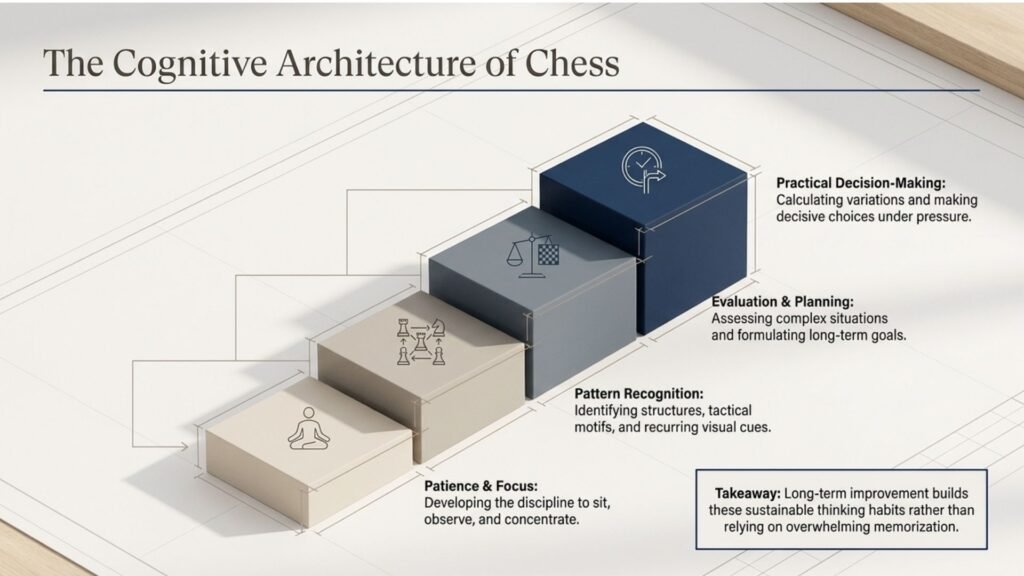
Many people begin learning chess simply because they enjoy the game. Over time, they discover that lasting improvement comes from developing practical thinking habits rather than collecting more information. Strong players are not necessarily the ones who memorize the most—they are often the ones who understand positions, recognize opportunities, and apply sound principles consistently.
For children, chess provides a structured environment where concentration, patience, discipline, and decision-making are developed through regular practice. For adults, it offers an engaging way to strengthen logical thinking while enjoying a game that continues to present new challenges throughout life.
Benefits of Learning Chess
Learning chess can help students:
- Develop stronger concentration and focus.
- Improve logical thinking and planning.
- Recognize patterns more quickly.
- Strengthen visualization and calculation skills.
- Practice making decisions with incomplete information.
- Build patience and resilience after mistakes.
- Develop disciplined study habits.
- Improve confidence through gradual progress.
- Enjoy a lifelong game that rewards continuous learning.
How Chess Improvement Really Works
One of the biggest misconceptions about chess is that improvement comes from learning more opening moves. While opening knowledge certainly has value, most players improve because they strengthen the skills that appear in every game.
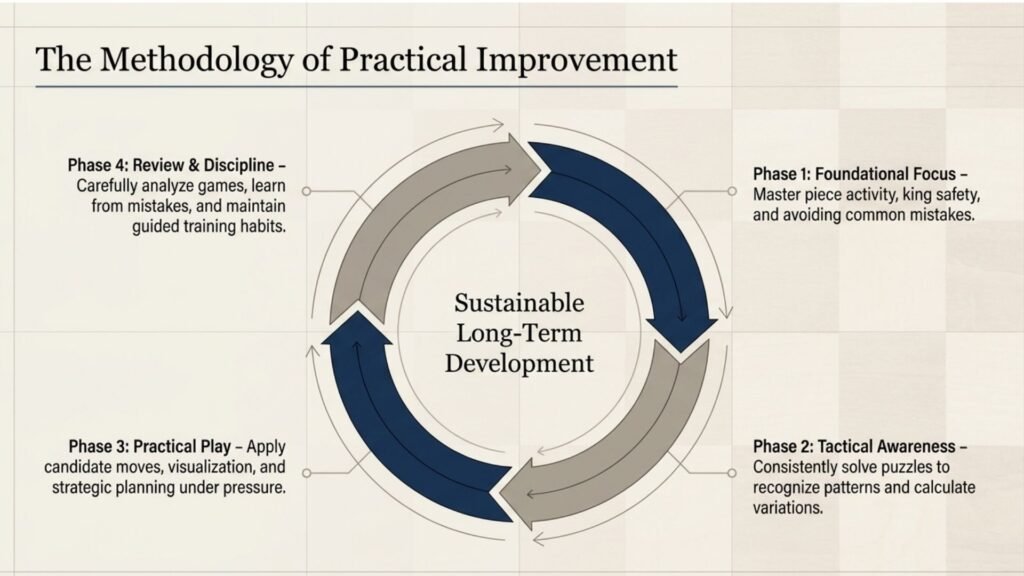
Think of chess improvement like building a house. A beautiful roof cannot compensate for a weak foundation. Likewise, advanced opening theory cannot replace strong tactical awareness, positional understanding, disciplined thinking, or effective training habits.
Every major area of chess supports the others, creating one complete learning system rather than a collection of unrelated topics.
| Area | Why It Matters |
|---|---|
| Chess Basics | Builds the foundation for every stage of improvement. |
| Chess Openings | Helps you reach playable positions with confidence. |
| Chess Tactics | Wins material, avoids blunders, and creates opportunities. |
| Chess Strategy | Develops planning and positional understanding. |
| Chess Endgames | Helps convert advantages into victories. |
| Chess Thinking | Improves practical decision-making during every game. |
| Chess Training | Builds consistency and long-term improvement habits. |
| Chess Tournaments | Helps apply your skills under competitive conditions. |
The strongest players do not study these areas in isolation. They understand how each one supports the others throughout their chess journey.
Daily Chess Improvement System
Improving at chess does not require spending several hours every day studying. In fact, short, consistent practice sessions are usually more effective than occasional marathon study sessions.
A simple daily improvement routine might include:
- Solve 10–20 tactical puzzles.
- Play one thoughtful practice game.
- Review mistakes from recent games.
- Study one strategic or endgame concept.
- Practice visualization or calculation exercises.
Small improvements repeated consistently often produce far greater long-term results than irregular bursts of study.
Common Beginner Mistakes
Almost every improving player experiences similar challenges. Recognizing these mistakes early can save months of frustration.
Memorizing Before Understanding
Many beginners try to memorize long opening variations before they understand development, center control, and king safety. When opponents play unexpected moves, memorization quickly breaks down.
Playing Without Reviewing Games
Simply playing more games does not guarantee improvement. Reviewing games helps identify recurring mistakes and highlights the areas that need the most attention.
Ignoring Tactical Training
Tactics appear in almost every game. Regular puzzle solving develops pattern recognition, improves calculation, and reduces simple blunders.
Studying Too Many Topics at Once
Switching constantly between openings, tactics, endgames, videos, and books often creates confusion. A structured study plan produces steadier progress.
Expecting Immediate Results
Chess improvement is gradual. Consistent practice over weeks and months produces much better results than occasional intensive study sessions.
Choosing the Right Starting Point
If you’re unsure where to begin, use your current experience as a guide.
| Current Level | Recommended Starting Point |
|---|---|
| Never played before | Chess Basics |
| Know the rules | Chess Openings and Chess Tactics |
| Play regularly online | Chess Strategy, Chess Thinking, and Game Analysis |
| Preparing for tournaments | Chess Endgames, Chess Thinking, and Chess Tournaments |
Remember that every player progresses at a different pace. The best place to start is wherever you are today, then build your understanding one step at a time.
Chess Learning for Kids
Children often learn chess differently from adults. While adults may enjoy studying books or analysing games independently, young learners usually improve through structured guidance, engaging lessons, regular practice, and positive encouragement.
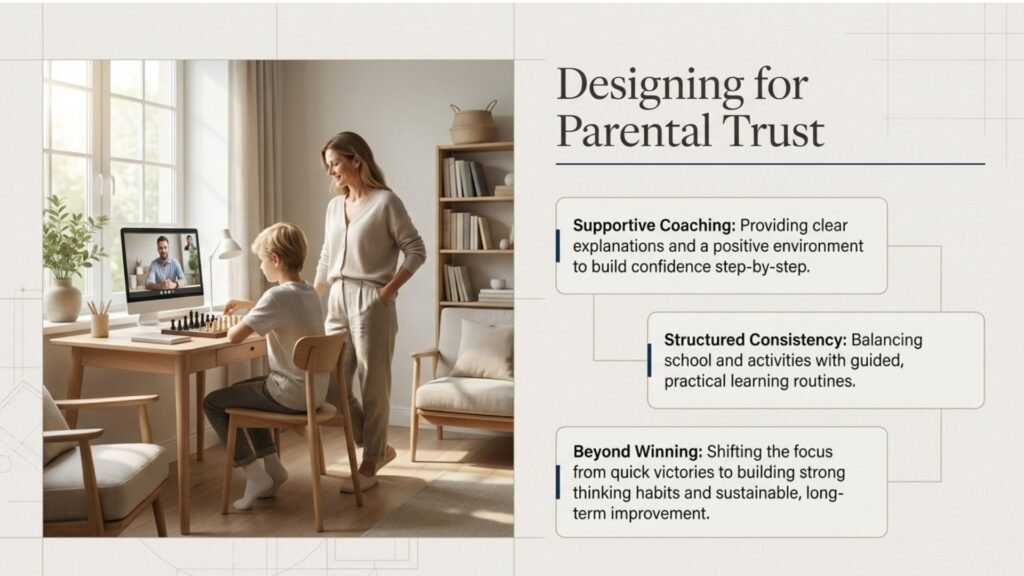
The goal is not simply to teach children how to win games. A well-designed learning system helps them build confidence, develop better thinking habits, and enjoy the process of learning. When children enjoy learning, they are much more likely to stay consistent, and consistency is one of the biggest factors in long-term improvement.
Young players benefit most when lessons introduce new ideas gradually instead of overwhelming them with advanced theory. Every concept should build naturally on previous knowledge so children understand why ideas work rather than simply memorizing moves.
How Parents Can Support Chess Learning
Parents can help by:
- Encouraging regular practice instead of occasional long study sessions.
- Focusing on improvement rather than only wins and losses.
- Allowing children to learn from mistakes without fear of criticism.
- Maintaining a healthy balance between chess, school, and other activities.
- Celebrating effort, discipline, and good decision-making.
- Helping children build consistent study routines.
Children who feel supported rather than pressured usually remain motivated for much longer.
Tournament Preparation Checklist
Before your next tournament, make sure you:
- Review your opening repertoire.
- Solve tactical exercises regularly.
- Practice calculation without moving the pieces.
- Review recent tournament or practice games.
- Get adequate rest before the event.
- Arrive early and become familiar with the venue.
- Stay calm after mistakes and continue fighting throughout the game.
Tournament experience is one of the best teachers. Every event provides valuable lessons that contribute to long-term improvement.
Frequently Asked Questions
How long does it take to learn chess?
You can learn the basic rules within a few hours, but becoming a stronger player requires consistent practice over time. Improvement depends on the quality of your study, regular game analysis, and practical experience.
Where should beginners start?
Begin with the fundamentals, including piece movement, check and checkmate, opening principles, and simple tactical patterns. A strong foundation makes every later stage of learning much easier.
Should I memorize openings?
Not initially. Understanding opening principles such as development, center control, and king safety is usually far more valuable than memorizing long opening variations.
How much should I practice each week?
Consistency matters more than quantity. Thirty to sixty minutes of focused practice each day often produces better results than occasional long study sessions.
Can adults learn chess successfully?
Absolutely. Chess can be learned at any age. Adults often bring patience, discipline, and life experience that help them learn effectively.
Is solving puzzles enough to improve?
No. Tactical puzzles are important, but they should be combined with practical games, strategic study, endgame practice, and game analysis to develop complete chess understanding.
How important is game analysis?
Reviewing your own games is one of the fastest ways to improve. It helps identify recurring mistakes and reinforces good decision-making.
How can parents support a child learning chess?
Parents can encourage regular practice, celebrate effort, maintain realistic expectations, and create a positive learning environment. Supporting the learning process is usually more valuable than focusing only on tournament results.
Need Help Choosing the Right Learning Path?
Every student begins at a different stage. Some are learning chess for the first time, while others want to prepare for tournaments or build a more structured improvement plan.
If you’re unsure where to begin, a chess assessment can help identify your current level, strengths, areas for improvement, and the most suitable learning pathway. Instead of guessing what to study next, you’ll have a clearer direction based on your goals and experience.
Start Your Structured Chess Journey
✔ Understand your current playing level
✔ Identify the skills that need the most attention
✔ Receive guidance on the most effective learning path
✔ Build a long-term improvement plan with confidence