
Learn Chess
Tournament Chess: Complete Beginner Guide
Learn how tournament chess works step-by-step, including preparation, confidence, time management, notation, practical thinking methods, and competitive improvement.
Tournament chess can feel exciting, challenging, and sometimes intimidating for beginners and young players.
Many students focus only on chess moves while ignoring tournament preparation, confidence, time management, and practical thinking processes.
This guide will help you understand tournament chess step-by-step in a calm, structured, and practical way.
If you haven’t yet mastered the fundamentals, begin with our Complete Beginner Chess Guide. It provides the learning roadmap that prepares new players for competitive chess.
What You’ll Learn in This Guide
- What tournament chess is
- How chess tournaments work
- Time controls and chess clocks
- Tournament preparation systems
- Confidence and focus
- Thinking processes during games
- Tournament etiquette
- How pairings work
- Notation basics
- How to handle losses
- Post-game analysis methods
- Common beginner tournament mistakes
- How parents should support children
Table of Contents
- What Is Tournament Chess?
- Why Tournament Chess Matters
- Online vs Over-the-Board Tournaments
- How Chess Tournaments Work
- Chess Clocks and Time Controls
- Tournament Preparation Systems
- Tournament Thinking Process
- Confidence and Focus During Games
- Tournament Etiquette
- How Pairings Work
- Notation Basics
- Common Beginner Tournament Mistakes
- How to Handle Wins and Losses
- Post-Game Analysis
- How Strong Tournament Players Think
- Parent Guide for Tournament Chess
- Frequently Asked Questions
- What to Learn Next
What Is Tournament Chess?
Tournament chess is competitive chess played in organized events using official rules, pairings, time controls, and structured rounds.
Tournaments help players:
- Apply their chess skills practically
- Build confidence
- Improve concentration
- Develop competitive experience
- Learn from real games
Tournament chess is organized competitive chess played using official rules, time controls, pairings, and structured rounds.
Why Tournament Chess Matters
Many students improve faster after playing tournaments because tournaments create a practical learning experience.
Tournament play helps players improve:
- Decision-making
- Focus
- Time management
- Emotional control
- Practical thinking
Online vs Over-the-Board Tournaments
Online Chess Tournaments
- Played digitally
- Faster access to competition
- Convenient for regular practice
- Good for building experience
Over-the-Board Chess Tournaments
- Played physically on chess boards
- Require notation and clock handling
- Improve concentration and discipline
- Create a deeper tournament experience
How Chess Tournaments Work
Most tournaments are organized into rounds where players face opponents with similar scores.
Tournament formats may include:
- Swiss System
- Round Robin
- Knockout Events
- Arena Tournaments
Chess Clocks and Time Controls
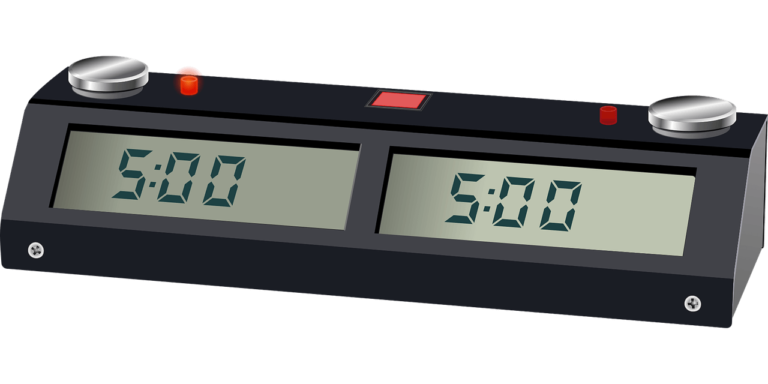
Chess clocks help manage each player’s thinking time during games.
Common time controls include:
- Bullet
- Blitz
- Rapid
- Classical
Tournament Preparation Systems
The Night Before the Tournament
- Sleep properly
- Prepare chess materials
- Avoid excessive late-night study
- Stay calm and relaxed
Tournament Day Preparation
- Arrive early
- Eat properly
- Stay hydrated
- Warm up mentally
- Avoid panic
| Tournament Checklist | Status |
|---|---|
| Chess Set | ✓ |
| Scoresheet & Pen | ✓ |
| Water Bottle | ✓ |
| Snacks | ✓ |
| Tournament Registration | ✓ |
Tournament Thinking Process
Strong tournament players follow structured thinking processes instead of moving impulsively.
- Check opponent threats
- Look for tactical ideas
- Evaluate candidate moves
- Consider the king’s safety
- Manage time carefully
Tournament improvement comes from disciplined thinking, not rushing moves under pressure.
Confidence and Focus During Games
Many beginners lose confidence after mistakes or difficult positions.
Strong tournament habits include:
- Staying calm after mistakes
- Focusing on the current position
- Avoiding emotional reactions
- Managing pressure step-by-step
Tournament Etiquette
- Shake hands respectfully
- Remain quiet during games
- Record moves properly
- Respect opponents and arbiters
- Accept results calmly
How Pairings Work
Most tournaments pair players based on score and rating after each round.
This helps create balanced competitive games.
Notation Basics
Tournament players often record their moves using chess notation.
- e4
- Nf3
- Bb5
Notation helps players review games and improve after tournaments.
Common Beginner Tournament Mistakes
- Moving too quickly
- Ignoring time management
- Panicking after mistakes
- Focusing only on openings
- Failing to review games
- Comparing constantly with stronger players
How to Handle Wins and Losses
Tournament chess includes both victories and difficult losses.
Strong improvement comes from learning calmly after every game.
- Review mistakes objectively
- Avoid emotional reactions
- Focus on learning
- Maintain a long-term perspective
Post-Game Analysis
Reviewing tournament games is one of the fastest ways to improve.
- Identify tactical mistakes
- Review time management
- Understand critical positions
- Study missed opportunities
How Strong Tournament Players Think
Strong tournament players constantly evaluate:
- King safety
- Tactical threats
- Piece activity
- Time management
- Position evaluation
- Psychological stability
Parent Guide for Tournament Chess
Parents play an important role in helping children enjoy tournament chess positively.
- Focus on learning instead of ratings
- Encourage calm reflection
- Avoid pressure after losses
- Support healthy tournament routines
- Celebrate long-term improvement
Frequently Asked Questions
How should beginners prepare for chess tournaments?
Beginners should focus on rest, confidence, practical preparation, tactical awareness, and calm thinking instead of trying to memorize excessive opening theory.
What should I bring to a chess tournament?
Players should usually bring a chess set, scoresheet materials, water, snacks, and tournament registration details.
How do tournament pairings work?
Most tournaments pair players with similar scores after each round to create balanced competitive games.
What to Learn Next
- Chess Basics for Beginners
- Chess Openings
- Chess Tactics
- Chess Strategy
- Chess Endgames
- Improve at Chess
Want Structured Tournament Guidance?
Tournament improvement becomes much easier with structured preparation, guided feedback, confidence systems, and practical competitive training.